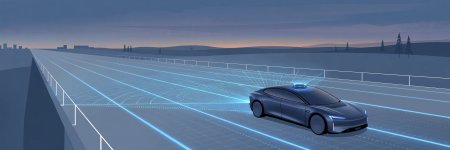
Volvo Cars is expanding its partnership with Nvidia to develop a new generation of driver-assistance and automated-driving technology, the companies announced on Thursday, as automakers race to bring increasingly advanced hands-free driving features to market.
Volvo will combine its safety systems and engineering expertise with Nvidia's artificial intelligence and computing technologies, including the Hyperion sensor, computer architecture and autonomous-driving software stack, the companies said.
Supervised first, hands-free next
Alwin Bakkenes, Volvo Cars' head of software engineering, told Reuters the first deployment would focus on supervised driving features, with drivers remaining responsible for the vehicle. But Volvo's ambition is to gradually introduce more advanced capabilities, including hands-free driving in urban areas and on highways.
The technology should appear in Volvo vehicles before 2030 and will be launched in multiple regions simultaneously, excluding China, Bakkenes said. Volvo, which is majority-owned by China's Geely Holding, has not chosen a pricing model yet — but Bakkenes said the features would not be limited to higher-priced models.
The expanded partnership brings the latest automated-driving software to more of Volvo's lineup, not just its electric vehicles. All of Volvo's battery-electric vehicles already use Nvidia's Orin computer chip, which processes information from cameras, radar and other sensors. Volvo now plans to standardise more broadly on Nvidia's Hyperion platform from both a hardware and sensor perspective, according to TechCrunch's report on the announcement.
The wider race
Volvo joins a crowded field of automakers targeting more advanced automated driving. Mercedes-Benz, BMW and Ford are all pursuing systems ranging from hands-free highway driving to self-driving operations in limited conditions, while Tesla is pushing for broader approval of its assisted-driving technology in Europe, with an EU-wide vote possible in December.
"The most important functionality of autonomous driving assist technology is safety," Nvidia automotive chief Ali Kani told Reuters. "We believe that we're going to make the stack safer getting to work with Volvo."
Sources:
Reuters: Volvo Cars expands automated driving partnership with Nvidia
TechCrunch: Volvo makes a bigger bet on Nvidia for hands-free automated driving
Volvo will combine its safety systems and engineering expertise with Nvidia's artificial intelligence and computing technologies, including the Hyperion sensor, computer architecture and autonomous-driving software stack, the companies said.
Supervised first, hands-free next
Alwin Bakkenes, Volvo Cars' head of software engineering, told Reuters the first deployment would focus on supervised driving features, with drivers remaining responsible for the vehicle. But Volvo's ambition is to gradually introduce more advanced capabilities, including hands-free driving in urban areas and on highways.
The technology should appear in Volvo vehicles before 2030 and will be launched in multiple regions simultaneously, excluding China, Bakkenes said. Volvo, which is majority-owned by China's Geely Holding, has not chosen a pricing model yet — but Bakkenes said the features would not be limited to higher-priced models.
The expanded partnership brings the latest automated-driving software to more of Volvo's lineup, not just its electric vehicles. All of Volvo's battery-electric vehicles already use Nvidia's Orin computer chip, which processes information from cameras, radar and other sensors. Volvo now plans to standardise more broadly on Nvidia's Hyperion platform from both a hardware and sensor perspective, according to TechCrunch's report on the announcement.
The wider race
Volvo joins a crowded field of automakers targeting more advanced automated driving. Mercedes-Benz, BMW and Ford are all pursuing systems ranging from hands-free highway driving to self-driving operations in limited conditions, while Tesla is pushing for broader approval of its assisted-driving technology in Europe, with an EU-wide vote possible in December.
"The most important functionality of autonomous driving assist technology is safety," Nvidia automotive chief Ali Kani told Reuters. "We believe that we're going to make the stack safer getting to work with Volvo."
Sources:
Reuters: Volvo Cars expands automated driving partnership with Nvidia
TechCrunch: Volvo makes a bigger bet on Nvidia for hands-free automated driving